Sagano Bamboo ForestAn Independent Guide Check Availability

Sagano Bamboo Forest

A 400-metre corridor of bamboo on Kyoto's western edge, free to walk and open around the clock. Compare Sagano Bamboo Forest tours by the things the listings bury: which route enters the rickshaw-only lane, how long you get among the stalks, and what the price actually covers.

Updated August 2026

  • Rated 4.8 to 5.0 on GetYourGuide
  • Free cancellation up to 24 hours
  • Grove entry is free — tours sell the guiding, not the gate

Quick answer

The grove itself costs nothing and never closes, so a tour here buys context and access, not a ticket. We currently compare six listings. The rickshaw tour at $50.49 is the only one that enters the fenced rickshaw-only lane, the $43.39 bus day folds the bamboo into five Kyoto headliners, and the $150 train-boat-onsen combination treats Arashiyama as a full scenic day. Walk in before 8:00 and you will have the path close to yourself.

Key takeaways

Sagano Bamboo Forest Tours

Six listings, from a 45-minute rickshaw ride to a ten-hour city circuit that ends in the grove. All six run with free cancellation up to 24 hours before the start; booking, payment and customer service sit with GetYourGuide, and the prices, ratings and review counts below were read from the listings in August 2026.

Independent tour comparison
Last price check: August 2026
Facts checked against temple and transit sources
Traveller feedback reviewed: 5,900+ reviews

Sagano vs Arashiyama: Same Bamboo Forest, Two Names

Half the confusion about this place starts with the map. Sagano Bamboo Forest, Arashiyama Bamboo Grove, Chikurin-no-Komichi: one path, three labels.

One grove, two district names

Sagano is the flat district north of the Katsura River; Arashiyama is strictly the mountain on the south bank, though in practice the name has spread across the whole tourist quarter around Togetsukyo Bridge. The bamboo grove sits in Sagano, a few minutes north of Tenryu-ji Temple, so both names point at the same 400 m corridor of moso bamboo. Guidebooks pick one label, GetYourGuide listings pick the other, and Japanese signage mostly says Chikurin-no-Komichi, the small path of the bamboo grove.

If a tour mentions the Arashiyama Bamboo Grove and you searched for the bamboo forest of Sagano, you are not looking at two rival forests. Every tour on this page walks or rides the same corridor.

Why the distinction still matters for your day

The name you follow changes where you start. Coming by JR you arrive in Sagano proper and walk into the grove from the east, past Tenryu-ji's north gate. Coming by the Randen tram or the Hankyu line you land near Togetsukyo Bridge and approach from the south, through the main shopping street.

The southern entrance is the one that bottlenecks by mid-morning, which is why the Tenryu-ji north gate trick is worth knowing. Local operators also split the labels by product: rickshaw crews and the scenic railway brand themselves Sagano, walking tours sell Arashiyama. Same stalks either way.

What to Expect on the Path

The honest version first: the walk is short. Knowing that going in is the difference between a highlight and a shrug.

The main path takes 10 to 15 minutes

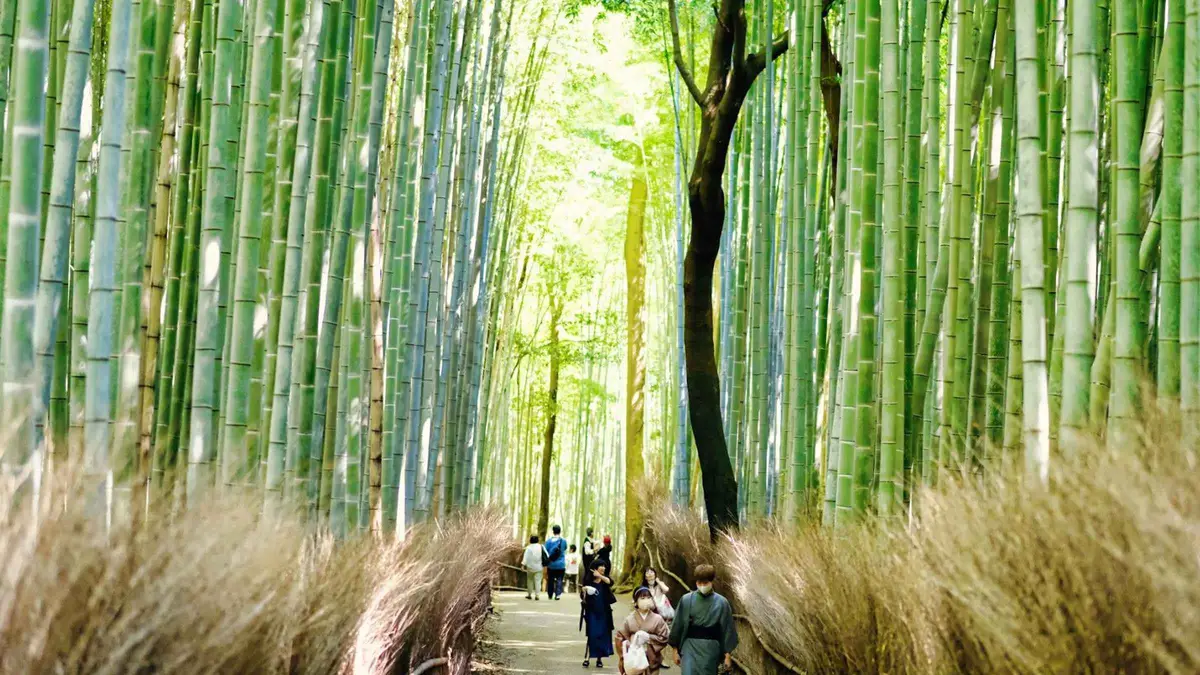
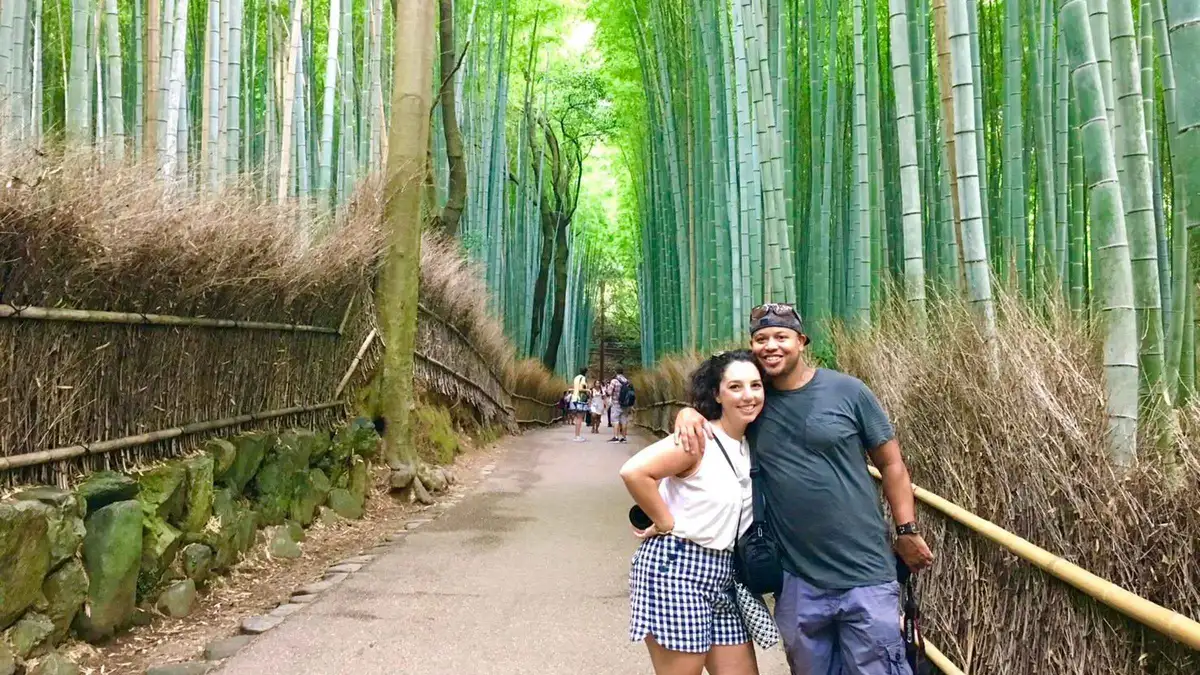
The public route through the Sagano Bamboo Forest runs roughly 400 m from the entrance near Nonomiya Shrine up a gentle slope to the gate of Okochi-Sanso Villa. At a stroll with photo stops it takes 10 to 15 minutes end to end. Most of the one-star reviews of the grove trace back to that single fact arriving as a surprise at 11:00 with four hundred other people on the path.

Treat the grove as the centrepiece of an Arashiyama half day rather than the whole show and the maths changes: Tenryu-ji, Nonomiya Shrine, the river bank and Okochi-Sanso all hang off the same short corridor.

The rickshaw-only lane is the photo you came for

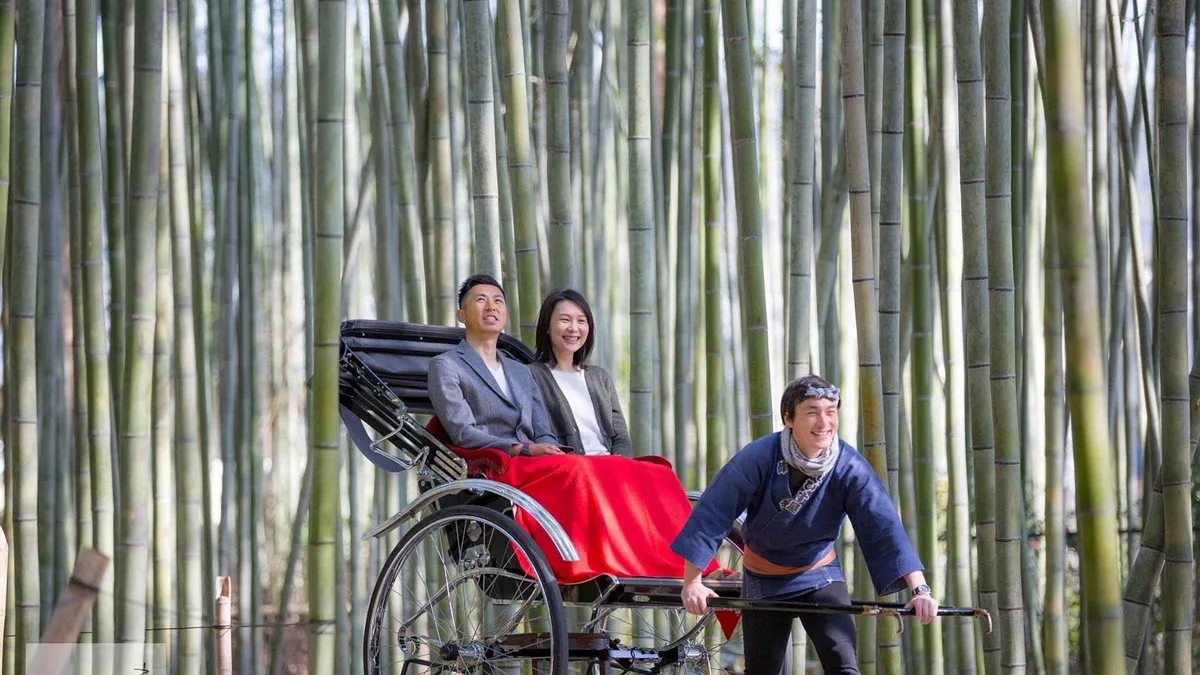
The stretch where the bamboo presses in from both sides and the fences drop away, the one on the postcards, is a separate lane closed to pedestrians. Only Ebisuya rickshaws enter it. On foot you shoot through and over a low fence; from the rickshaw seat the lane opens up in front of you, and the pullers know exactly where the light lands and double as photographers.

That access is the concrete thing the rickshaw tour sells, from about ¥7,500 to ¥9,000 per person for 30 to 45 minutes when booked at the bridge, or $50.49 with an English-speaking puller-guide booked ahead. Whether it is worth it depends on how much of your trip lives in the pictures you bring home.

Use Tenryu-ji's north gate to skip the bottleneck

Tenryu-ji, the Zen temple whose gardens border the grove, has a north gate that opens straight onto the bamboo path. Enter the temple from the main southern side (garden ¥500, about $3.40; buildings ¥300 extra), walk the garden, and exit through the north gate: you step into the grove past the southern crowd funnel instead of through it. Guided walks use this routing constantly, and it is the single best free-with-admission trick in the district.

In the other direction, at the grove's top end, Okochi-Sanso Villa charges ¥1,000 (about $6.80) with a bowl of matcha included, and its hillside garden looks back over the bamboo canopy toward the city.

Entrance Fee and Opening Hours

The grove is free and open 24 hours: no gate, no ticket booth, no closing bell. A fee existed only before 2015. What costs money is everything around it.

What is free and what is paid

Walking the bamboo path costs nothing at any hour, which makes the Sagano Bamboo Forest one of the few headline Kyoto sights without a ticket line. The paid sites cluster within ten minutes of the path, and their fees were checked in August 2026 at roughly ¥148 to the dollar. Tenryu-ji: garden ¥500 ($3.40), temple buildings ¥300 more.

Okochi-Sanso Villa: ¥1,000 ($6.80) including matcha. Iwatayama Monkey Park across the river: ¥800 ($5.40) adults, ¥400 children, cash only at the booth, with a 15-to-20-minute climb to the monkeys and last entry tied to seasonal closing times. Nonomiya Shrine, halfway along the path, is free.

Bus-tour bundles like the all-inclusive day at $95.94 fold the temple admissions into the price; the grove itself is never part of any ticket because there is no ticket.

Hours worth knowing around the free path

The grove never closes, but its neighbours keep temple hours: Tenryu-ji runs 8:30 to 17:00, Okochi-Sanso 9:00 to 17:00, the monkey park opens at 9:00 and closes 16:30 in summer, 16:00 from October. That timing creates the two quiet windows on the path: before the temples open, when only photographers and joggers are about, and after 17:00, when the day-trip flow reverses toward the stations. Street lamps light the corridor after dark, dimly.

It is walkable and safe, though the bamboo reads as silhouette rather than green.

Getting There

Three railways serve the grove, and none of them is bad. The choice is between speed, charm and where you start from.

JR Sagano Line: fastest from Kyoto Station

From Kyoto Station, the JR Sagano Line (also signed as the San-in Line) reaches Saga-Arashiyama Station in 15 minutes for ¥240, about $1.60. From the station it is a 10-minute walk west to the grove entrance, arriving on the quieter Sagano side. This is the route to pair with an early start: the first trains land you on the path well before 8:00.

The private walking tour meets exactly here, at the ticket gate on the station's second floor.

Randen tram and Hankyu: the scenic and the southern ways in

The Randen (Keifuku) line ends at Arashiyama Station in the middle of the tourist quarter, ¥250 flat fare from Shijo-Omiya, and the platform doubles as the Kimono Forest art installation, 600 fabric-wrapped pillars that glow after dusk. From there the grove is 5 to 10 minutes on foot past Tenryu-ji. Hankyu's Arashiyama Station sits across the river: about 20 minutes and ¥240 from Kyoto-Kawaramachi with a change at Katsura, then a 15-minute walk over Togetsukyo Bridge.

Buses exist but sit in the same traffic the trains ignore; skip them. If you are combining districts in one day, the bus tours solve the routing for you by driving between sights while you sit.

Best Time to Visit

The grove looks green all twelve months; bamboo does not do autumn colour. What changes through the day and the year is the number of people between you and it.

The crowd clock

Before 8:00 the path belongs to residents, photographers and the odd jogger. From 9:00 it fills steadily, and from about 10:00 to 16:00 the tour coaches and rail day-trippers own it, with the southern entrance at its worst around midday. After 17:00 the flow reverses and by dusk the corridor empties again.

The practical reading: walk the grove first thing or last thing, and spend the crowded middle of the day at Okochi-Sanso, the monkey park or on the river, where the crush never quite follows. The early-format walking tour and the rickshaw, which glides through the closed lane regardless of the hour, are the two bookable ways around the peak.

Seasons: green year-round, different edges

November and early December pair the evergreen bamboo with maple colour at Tenryu-ji and Okochi-Sanso, and they are the busiest weeks of the year. Spring brings cherry blossom along the river and mild walking weather at 15 to 20°C. Summer is humid at 30 to 35°C, but the grove is the coolest place in the district, its canopy dropping the felt temperature by several degrees, and the creak of stalks in the wind, officially listed among Japan's hundred soundscapes, is at its best. Winter is quiet and sharp, occasionally dusted with snow, at 0 to 8°C. On wind: the grove is genuinely atmospheric in a breeze and eerie in a storm, and January-February travellers should note the train-boat-onsen tour swaps the paused scenic railway for a temple or monkey park stop in those months.

Night visits and illuminations

The path is lit and open at night, but the bamboo needs light to be more than shadow. The Hanatouro lantern festival that once lit the grove every December ended in 2021. Since then, ticketed evening illuminations have returned as short seasonal runs, most recently in autumn 2025 at ¥1,500 for timed evening entry, with dates announced a few weeks ahead and changed yearly.

If a night grove is the reason you are coming, verify the current illumination dates on the official Kyoto tourism channels before you build an evening around it; on ordinary nights you will find a dim, quiet, faintly surreal corridor rather than the glowing tunnel of the posters.

Around the Grove: What Hangs Off the Same Short Path

The grove is 15 minutes; the district is a day. Everything below starts within ten minutes of the bamboo.

Nonomiya Shrine and the Kimono Forest

Nonomiya Shrine sits halfway along the bamboo path behind a rare black-lacquered torii, free to enter, and its role in the Tale of Genji makes it the literary stop on the walk. Ten minutes south, the Randen tram terminal doubles as the Kimono Forest: 600 acrylic pillars wrapped in kimono fabric that switch on at dusk and cost nothing to wander. Both fold naturally into the walk between the grove and the river, and the 3-hour walking tour strings grove, shrine and pillars together before crossing town to Kinkaku-ji.

Iwatayama Monkey Park and the river

Across Togetsukyo Bridge, a 15-to-20-minute uphill path climbs to the Iwatayama Monkey Park, where about 120 Japanese macaques roam free around a summit hut with one of the best views over Kyoto. Entry is ¥800 for adults and ¥400 for children, cash only at the booth, open from 9:00 with last entry tied to a 16:30 close in summer and 16:00 from October. Below it, the Katsura riverbank fills with rental rowboats and food stalls; this is the crowded-hours refuge while the grove is at its worst.

The scenic railway and the Hozugawa boats

The Sagano Romantic Train rolls 7 km up the Hozugawa gorge from Saga-Torokko Station at 25 km/h, all windows and river views, and the classic loop pairs it with a two-hour traditional boat run back down the rapids to Togetsukyo Bridge. Doing that loop independently means juggling two tickets and a transfer at Kameoka; the train-boat-onsen tour packages both with a guide and a hot-spring finish. Note the train's winter pause in January and February, when the tour substitutes a temple or the monkey park.

An Early Morning at the Sagano Bamboo Forest, Hour by Hour

The self-guided version of a perfect grove morning, built around the crowd clock. Tour formats compress the same ground into their own schedules.

  1. 7:15

    JR out of Kyoto Station

    The Sagano Line local costs ¥240 and takes 15 minutes to Saga-Arashiyama. Sit on the left for the first mountain glimpses.

  2. 7:35

    Walk in through Sagano

    Ten minutes west from the station through a neighbourhood still opening its shutters. You enter the grove from the quiet eastern side, not the Togetsukyo funnel.

  3. 7:45

    The corridor, nearly empty

    Forty minutes for a 15-minute path: walk it twice, once for the eyes and once for the camera. The light comes in low and sideways and the only sound is the stalks knocking.

  4. 8:30

    Tenryu-ji as the temple opens

    Enter from the grove side as the gates open at 8:30, walk the pond garden for ¥500, and exit through the north gate back into the bamboo — the reverse of the usual trick, twice through the corridor for one admission.

  5. 9:30

    Okochi-Sanso with matcha

    At the grove's top end, the actor's villa charges ¥1,000 with a bowl of matcha included. Its hillside garden looks back over the canopy you just walked under.

  6. 10:30

    Cross the river ahead of the peak

    As the coaches unload into the grove behind you, cross Togetsukyo Bridge to the monkey park (¥800, cash) or claim a rowboat. The corridor is theirs until 16:00; the rest of Arashiyama is yours.

Photographing the Bamboo: What Works and What Does Not

The grove photographs harder than it looks. The postcard shots come from three specific situations, and two of them cost money.

The three shots that work

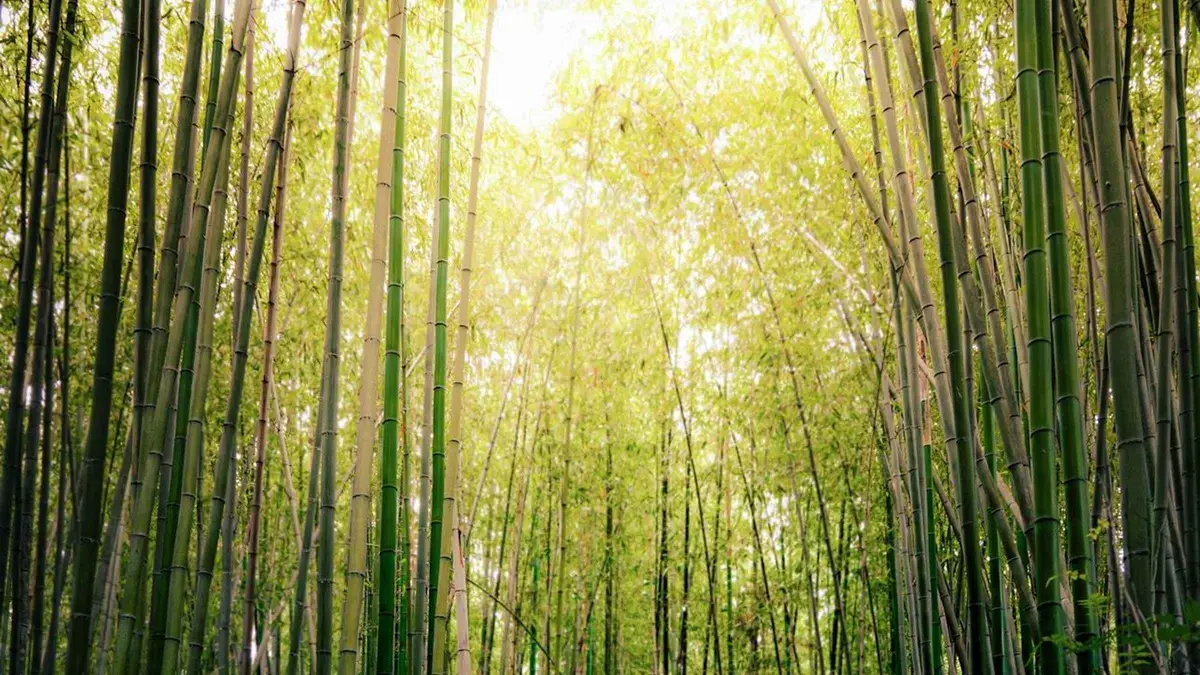
First: the low-angle canopy shot, free from anywhere on the path — point the camera 60 degrees up and the fences, people and lamp posts disappear, leaving converging stalks and a green ceiling. Second: the empty-corridor shot, free but paid for in sleep; before 8:00 you can frame 50 m of unbroken path, and by 10:00 you cannot. Third: the both-sides immersion shot from the rickshaw-only lane, where the fences drop away and bamboo closes over the track — that one exists only from the rickshaw seat, whose pullers know every angle and shoot for you.

Light, weather and the honest misses

Overcast days flatten the grove into grey-green mush; the corridor needs direct low sun slicing between the stalks, which means the first two hours after sunrise or the last one before it drops behind Arashiyama. A breeze helps more than it hurts, blurring the canopy while the trunks stay sharp. What does not work: midday shots down the path (a wall of backs), flash at night (silhouettes turn to cardboard), and the illumination posters' glowing tunnel, which was the Hanatouro festival that ended in 2021 and returns only as short ticketed seasonal runs.

Six Tours Side by Side

The column to read first is what each tour actually does in the grove: rides the closed lane, walks the public path, or makes it one stop among many.

Tour Price In the grove Book Total time What else you get Rating
Rickshaw $50.49 Rickshaw-only lane Details 45 min – 3 h 10 min Nonomiya Shrine, Rakushisha, photo stops 5.0 (524)
Train, boat & onsen $150 Guided walk Details 4.5 – 5 hours Scenic railway, Hozugawa boat, hot spring 5.0 (129)
5-sight bus day $43.39 30 min walk Details 10 hours Fushimi Inari, Kiyomizu-dera, Kinkaku-ji, Ryoan-ji, lunch 5.0 (27)
All-inclusive bus day $95.94 Walk via Tenryu-ji Details 8.5 – 9 hours 4 temple tickets, buffet lunch, 6-language audio 4.8 (5,217)
Walking + Golden Pavilion $48.57 Guided walk Details 3 hours Nonomiya, Kimono Forest, Kinkaku-ji, local transit 5.0 (2)
Private walking $126.23 As long as you like Details 4 hours Licensed private guide, custom route 4.9 (13)

Prices read from the GetYourGuide listings in August 2026; several were showing sale prices against higher list prices at the time of checking. Ratings and review counts are each listing's own.

Live Availability and Prices

Dates and live prices for the most-reviewed listing in this catalog, straight from the booking platform. Prices on this page were last read from the listings in August 2026.

Powered by GetYourGuide

How to Choose a Sagano Bamboo Forest Tour

Start from what the grove is to you: the destination, one frame of a bigger Kyoto reel, or the backdrop for photographs.

The photos are the point

Book the rickshaw. It is the only listing with access to the rickshaw-only lane, the pullers are practised photographers, and the 45-minute option at $50.49 covers the grove and Nonomiya Shrine. The longer runs, up to 3 hours 10 minutes, add Rakushisha's thatched poet's cottage and Nison-in on lanes most walkers never reach.

Two adults per rickshaw, wheelchair- and stroller-friendly, and 524 reviews holding a 5.0. Its one real limitation: rickshaws carry pairs, so groups of four split across two rickshaws and the price is per person, not per cart.

You have one day for all of Kyoto

Take a bus day and accept the trade: 30 to 50 minutes in the grove in exchange for Fushimi Inari, Kiyomizu-dera and the Golden Pavilion in the same sweep. The choice between the two is a price-versus-track-record call. The $43.39 day is the cheapest route through five headline sights, with three temple admissions and lunch included, but its 5.0 rests on 27 reviews.

The $95.94 all-inclusive is this catalog's volume pick, 4.8 across 5,217 bookings, with four temple tickets, a buffet lunch option and audio guides in six languages. Both depart early and run long; neither includes hotel pickup.

You want Arashiyama itself to be the day

The train, boat and onsen combination at $150 is the district-first option: the Sagano Romantic Train up the Hozugawa gorge, a two-hour traditional boat run back down, the bamboo grove on foot, then a hot-spring soak. Capped at nine people, 5.0 from 129 reviews, and the only listing here that ends in an onsen. The price is the catalog's ceiling, and January-February bookings should note the train substitution.

Pair it against the 3-hour walking tour at $48.57, which compresses bridge, grove, shrine, Kimono Forest and Kinkaku-ji into a morning using public transport; its 5.0 comes from just 2 reviews, which is why it sits low here despite the price.

You want it built around you

The private walking tour at $126.23 puts a licensed English-speaking guide at your disposal for four hours from JR Saga-Arashiyama Station, route negotiated on the spot: all grove, no grove, temples, riverside, food. Read the pricing model before comparing it on cost: entries, transit and lunch for you and the guide are paid on the day, which keeps the sticker under most private tours while the real total drifts with your choices. For families with a stroller, note this one bars large luggage and the rickshaw takes the stroller-friendly crown.

Or skip the tour entirely

Honest option of last resort: ride the JR line out before 8:00, walk the free path, take Tenryu-ji's north gate loop for ¥500, and you will have seen the grove properly for the price of a train ticket and a temple garden. What you give up is context, the closed lane, and the logistics of stitching five more sights onto the morning. The tours on this page exist for the days when that stitching is worth paying someone else to do.

What Travellers Said After Going

★★★★★ ★★★★★
Koki was a fabulous guide, great communicator, friendly, chatty, informative, and fun — and a brilliant photographer! The rickshaw was comfortable, and the blankets kept us snug and warm.
Stephanie · Verified booking · January 2026 · GetYourGuide verified review
★★★★★ ★★★★★
The tour was fantastic! They took us to some hidden places that weren't packed with people. Our guide was also a fantastic photographer!
Erin · United States · October 2025 · GetYourGuide verified review
★★★★★ ★★★★★
We had a brilliant day on the Sagano romantic train, river ride and Bamboo forest. Itsuki, our guide, was lovely and very informative. The guys on the boat worked hard but were also very entertaining. I highly recommend this trip!
Amanda · United Kingdom · March 2026 · GetYourGuide verified review
★★★★★ ★★★★★
Our guide Itsuki was so personable and friendly. The group was small so easy to ask questions. The railroad trip was very scenic and the crew on the boat trip were extremely entertaining. Great value for the money.
Marisa · Canada · September 2025 · GetYourGuide verified review
★★★★★ ★★★★★
Kanta was a nice and pleasant guide who gave us a good restaurant recommendation. Transport in an air-conditioned mini-bus was very comfortable. Would book again.
Sebastian · Switzerland · August 2026 · GetYourGuide verified review
★★★★★ ★★★★★
Mr. Mitsuhiko Seiyama was an incredible guide, made us feel very welcomed, and very knowledgeable about the area and Japan in general. The sweetest man, and great personality, and excellent English.
John N. · United States · March 2026 · GetYourGuide verified review

Verified GetYourGuide reviews for the tours on this page, quoted with their original dates.

Sagano Bamboo Forest: Questions Travellers Ask

Where is the Sagano Bamboo Forest located?

In the Sagano district of western Kyoto, just north of Tenryu-ji Temple in the Arashiyama tourist quarter. The nearest stations are JR Saga-Arashiyama on the Sagano Line, a 15-minute ¥240 ride from Kyoto Station and then a 10-minute walk, and the Randen tram's Arashiyama terminal, 5 to 10 minutes from the path. Getting there covers all three rail routes.

Are Arashiyama and Sagano bamboo forests the same?

Yes, the same grove under two names. Sagano is the district the bamboo actually stands in; Arashiyama is the mountain across the river whose name has spread over the whole area. Japanese signs call the path Chikurin-no-Komichi. Every listing on this page, whichever name it uses, walks or rides the same 400 m corridor.

How long is the walk through the bamboo forest?

About 400 m, or 10 to 15 minutes end to end at a photo-stop stroll. That brevity is the most common surprise in the reviews, so build the grove into a half day with Tenryu-ji, Nonomiya Shrine and Okochi-Sanso rather than travelling out for the path alone. The what to expect section lays out the geography.

How much does the Sagano Bamboo Forest cost to enter?

Nothing. There is no gate, no ticket and no opening hours; the path has been free since a small charge was scrapped years ago, and it stays open 24 hours. The money goes to the neighbours: Tenryu-ji ¥500, Okochi-Sanso ¥1,000 with matcha, the monkey park ¥800 cash only. The fees section prices the full cluster in yen and dollars.

Is the bamboo forest in Kyoto worth it?

At 7:30 with the light coming through sideways, yes, unambiguously. At noon in a crowd, honestly, less so; it becomes a short busy path. The grove rewards timing more than any other Kyoto sight. If your schedule cannot avoid the peak, the rickshaw tour is the one way to see it from a lane the crowd cannot enter.

Can you visit the bamboo forest at night?

You can — the path is lit and never closes — but expect silhouettes rather than glowing green. The December Hanatouro festival ended in 2021; ticketed illuminations have since returned only as short seasonal runs with yearly-changing dates, around ¥1,500 in autumn 2025. Check current dates before planning an evening visit. Best time to visit has the detail.

Do tours include the bamboo forest entrance fee?

There is no fee to include; the grove is free for everyone. What the bundled tours include is the paid sites around it: the $95.94 all-inclusive day carries four temple tickets including Tenryu-ji, and the $43.39 bus day covers Kiyomizu-dera, Kinkaku-ji and Ryoan-ji plus lunch. Read the Includes list, not the headline, when comparing.

Which tour actually rides through the rickshaw-only lane?

Only the Ebisuya rickshaw tour, $50.49 with 524 reviews at 5.0. The photogenic fenced lane is closed to pedestrians, so no walking tour, bus tour or private guide can take you into it on foot. If that specific shot is the goal, this is the listing; every other tour photographs the grove from the public path.

Pick how you want the grove: from the seat of a rickshaw in the closed lane, on foot before the crowds, or as one stop in a full Kyoto day.

The rickshaw's morning slots and November foliage dates go first

Check Availability
Tours from $43.39 Check Availability